The Story Behind “Bye, Felicia” and Why It Became a Cultural Catchphrase
Who Is Felicia?
Over the past decade, the phrase “Bye, Felicia” has slipped into everyday conversation, online culture, and countless memes. It is often used as a humorous way to dismiss someone who is being irritating, dramatic, or simply not worth engaging with. But where did the name Felicia get this reputation, and how did it become a global shorthand for brushing someone off?
Where the phrase came from
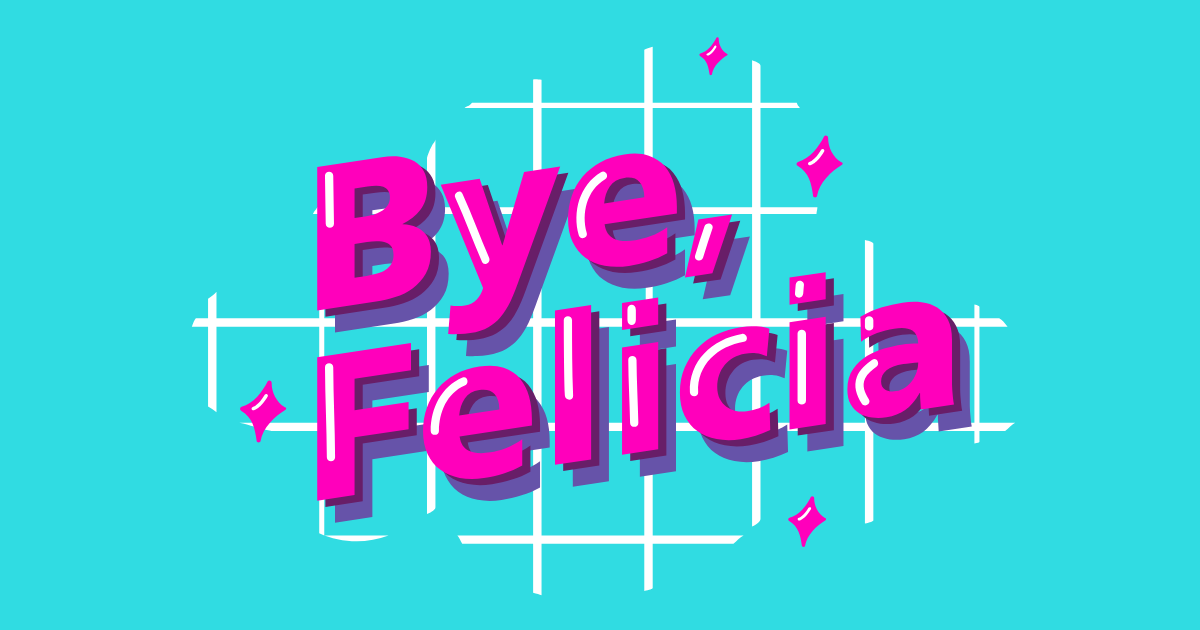
The phrase “Bye, Felicia” seems to have originated from a 1995 comedy film called Friday. In one scene, a character named Felicia repeatedly asks for things and generally gets in the way. Rather than arguing or engaging with her, the character played by Ice Cube delivers a quick, dismissive “Bye, Felicia.” The line was short, sharp, and perfectly conveyed the idea of shutting down nonsense without further explanation.
The film was popular at the time, but it was not until it resurfaced years later that it became more widespread, helped along on social media with memes, reaction GIFs, and short-form video clips.
What Felicia represents today
In modern culture, Felicia is not about the original film character. Instead, the name has developed a symbolic meaning. A “Felicia” is someone who is:
- annoying or overly demanding
- bringing unnecessary drama
- trying to get attention without offering anything meaningful
- someone you are happy to ignore or walk away from
It’s rarely intended as a serious insult. More often, it is used jokingly, as a playful nudge that someone is being a bit much. The humour lies in the quick dismissal. “Bye, Felicia” serves as a gentle boundary without escalating a situation.
Why this name caught on
The popularity of “Felicia” follows a common trend in internet culture where ordinary names become labels for certain behaviours. Just as Karen is associated with entitled complaints and Kyle with angry teenage energy, Felicia has become the personification of someone whose presence isn’t worth the effort.
The name itself worked perfectly for a meme: it is recognisable, fun to say, and not tied to a huge number of stereotypes before the phrase took off. Memes thrive on simplicity, and “Bye, Felicia” is as simple as it gets.
People use the phrase in different ways:
- as a caption to close off an unwanted conversation
- in a light-hearted joke between friends
- as a meme response to drama, spam comments, or attention-seeking posts
- to signal that something or someone is irrelevant
It can be playful or pointed, depending on context, but it is almost always meant to keep things light.
Should real Felicias be offended?
Just like with Karen, Kyle, or Chad, the stereotype is not truly about individuals with that name. It is shorthand for a type of behaviour, not a criticism of real people. Many actual Felicias embrace the meme and even find it amusing, while others prefer to distance themselves from the stereotype.
As with all name-based memes, sensitivity and context matter. In friendly conversation or internet humour, “Bye, Felicia” is fairly harmless. Used aggressively, it can come across as dismissive or rude — which is exactly its purpose.
“Bye, Felicia” is one of the internet’s most enduring catchphrases because it encapsulates a universal experience: the desire to walk away from drama with minimal fuss. A single name has come to represent the art of polite dismissal, and despite its origins nearly 30 years ago, the meme continues to thrive across generations.