Darren and Sharon: How Two Ordinary Names Became Aussie Stereotypes
Australia has always had a unique relationship with slang, humour, and cultural shorthand. Among our many home-grown expressions is the concept of Darren and Sharon. These were quite common baby names of the 1970s and 1980s, but evolved into light-hearted caricatures of an “Aussie bogan” stereotype.
The transformation of Darren and Sharon from everyday names to comedic shorthand began in Australian pop culture. As the bogan stereotype grew, especially in the late 80s and 90s, these names were often attached to fictional characters who were loud, brash or overly dramatic.
Television and comedy sketches played a major role. Exaggerated portrayals of characters named Darren or Sharon were presented as the sort of people who might:
- speak their minds a bit too freely
- wear trackies to the shops
- get into arguments over nothing
- enjoy a beer and a smoke at the weekend
- have a chaotic social life
- land in messy but amusing situations
Why these names?
There are a few reasons Darren and Sharon in particular became linked to the stereotype:
- Popularity at the right time
Both names were extremely common in Australia during the 70s and 80s, meaning they appeared everywhere — in schools, workplaces, footy clubs, and family BBQs. - Rhyming and rhythm
Darren and Sharon roll off the tongue together. The rhyme made them perfect for catchphrases, comedy sketches, and memes. - Cultural timing
As the bogan stereotype gained traction, writers and comedians needed names that felt familiar, relatable, and unmistakably Aussie. These two fit the bill perfectly.
Meet Darren: the knockabout bloke
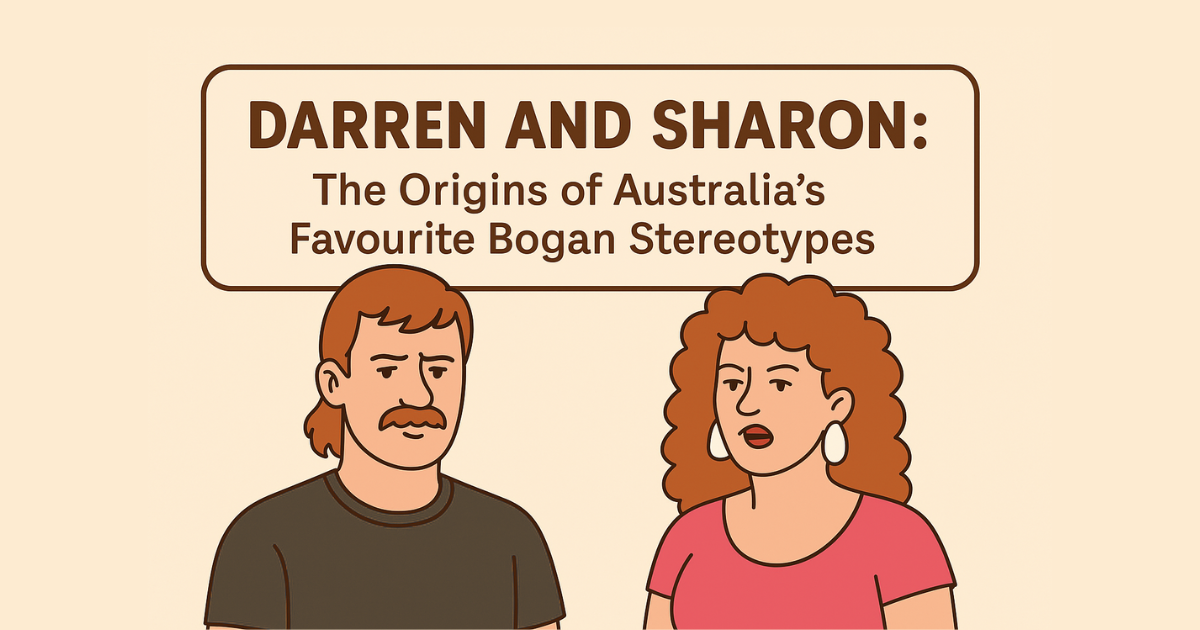
The stereotypical Darren is often imagined as:
- a cheerful but slightly rough-around-the-edges bloke
- someone who means well but finds himself in avoidable trouble
- a tradie, a footy fan, or a mate who is always “up for a laugh”
- the kind of guy who might have a too-loud laugh at the pub
- genuine-hearted but not overly refined
This portrayal is rarely malicious; Darren is usually the sort of character audiences support as they laugh at his antics.
Meet Sharon: the chaotic Aussie icon
Sharon’s reputation developed alongside Darren’s, but often with an even more comedic twist. A typical “Sharon” stereotype might include:
- a loud voice and an even louder personality
- strong opinions about everyday life
- dramatic storytelling and quick emotional reactions
- big hair, bold makeup, and even bolder expressions
- someone who loves a night out with the girls and a gossip session
These depictions are intentionally exaggerated for comedy rather than meant as personal criticism of people named Sharon.
How they appear in modern culture
Although the Darren and Sharon stereotype peaked in the 90s and early 2000s, it has persisted online through memes, jokes, and light-hearted references. Most Australians recognise the humour immediately. Not because they believe every Darren or Sharon behaves this way, but because the stereotype has become part of our shared cultural language.
The name poke fun at behaviour rather than attack people personally, and in most cases are used in a humorous, sentimental way. As with all stereotypes, tone and intent matter. Used gently, it’s a bit of harmless Aussie banter. Used aggressively, it can feel unfair or mocking.
Darren and Sharon are reminders of Australia’s distinct sense of humour — irreverent, self-aware, and full of character. These names have become cultural icons not because of the people who bear them, but because of the exaggerated personas built through decades of comedy and storytelling.