What did you call them?
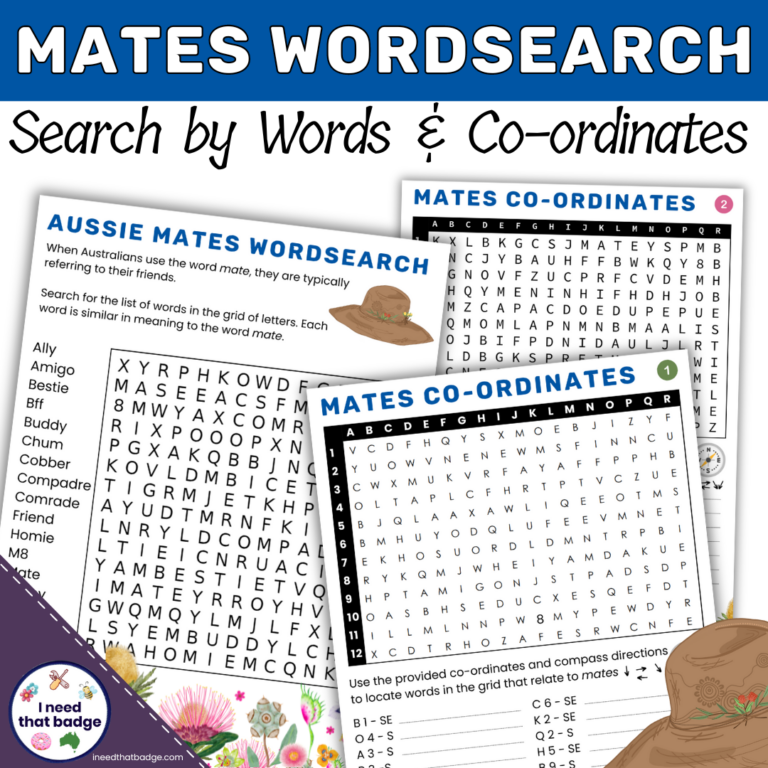
When I was a child, a favourite treat in our neighbourhood was a ‘mate‘. But apparently the correct name was a ‘cobber’.
You could buy them individually at the corner shop for just a few cents, making them an easy choice with pocket money.
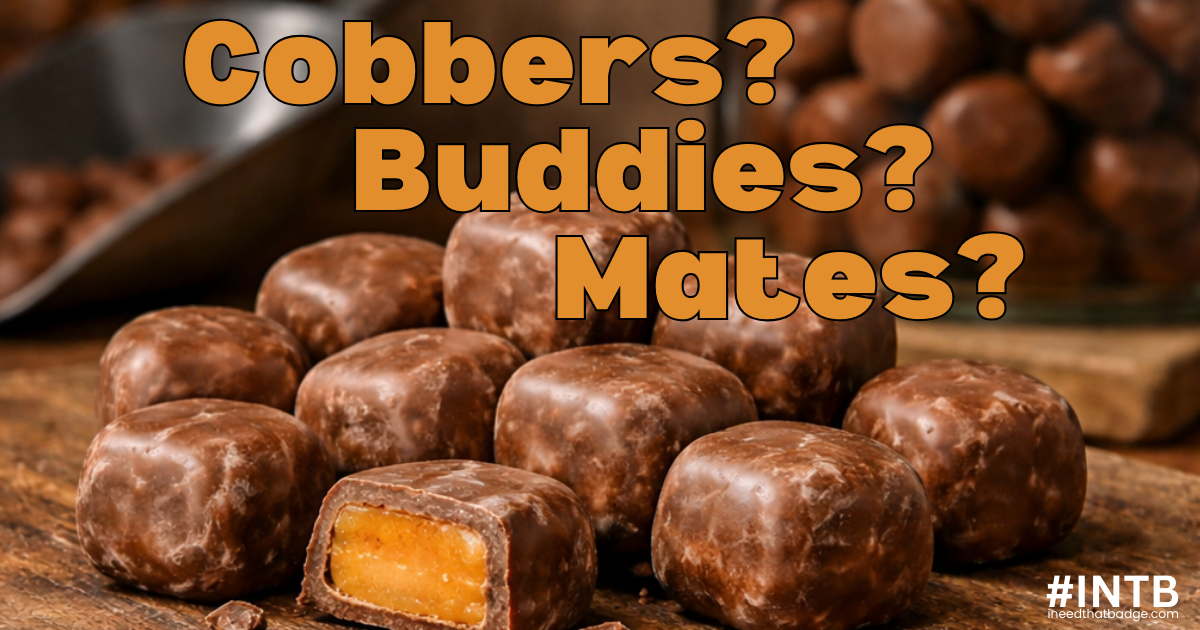
They were a well-known square confectionery made from a chewy caramel centre coated in milk chocolate. But what made them particularly interesting was the name. While my family called them mates, others knew them as buddies or cobbers. It seems that different names were used in different localities. Interchangeable terms, although not officially standardised. Different names, all referring to the same lolly. And each word meaning essentially the same thing — a friend.
History and origin
Cobbers first appeared in Australia during the mid 20th century, a period when local confectionery manufacturers focused on producing affordable, durable sweets that could withstand transport and storage in a warm climate. The name Cobber originates from Australian slang meaning “mate” or “friend”, a term that was widely used throughout everyday speech in Australia at the time. Over time, cobbers became associated with established confectionery lines and were later produced and distributed more widely, including through companies such as Allen’s, which helped maintain their availability while modernising packaging and distribution. Allen’s later incorporated the treat into its portfolio, maintaining the original format but modernizing packaging and distribution.
Each Cobber consists of a dense caramel center encased in smooth milk chocolate. The chewy caramel resulted in extended chew time. This combination of sweetness and texture made cobbers particularly popular among children and nostalgic adults seeking traditional confections.
Cobbers remain emblematic of classic Australian sweets, often mentioned alongside other nostalgic brands like Minties, Fantales and Jaffas. Their name, flavour, and texture have become shorthand for a style of no-frills confectionery that defined Australian childhood treats in the 1950s–1980s.
Each Cobber consisted of:
- a dense, chewy caramel centre
- coated in smooth milk chocolate
The caramel was designed to be firm rather than soft, resulting in a long-lasting chew. The contrast between the sweet chocolate coating and the rich caramel centre gave cobbers their distinctive flavour and texture.
A Familiar Part of Australian Childhood
Cobbers became a staple of Australian childhood, particularly from the 1950s through to the 1980s. They were commonly found in:
- corner shops and milk bars
- mixed lolly bags
- cinema snack counters
They are often remembered alongside other classic Australian treats such as Minties and Jaffas, forming part of a broader era of simple, recognisable sweets.
More Than Just a Name
There was a time when the meaning of the word cobber needed no explanation. It simply meant a mate — someone you trusted, shared with, and enjoyed simple moments alongside.
By giving a confectionery product this name, manufacturers created something that was not only a sweet treat, but also a reflection of everyday Australian language and culture. The use of names like cobbers, Mates, and Buddies highlights how strongly the idea of friendship was woven into even the smallest parts of daily life.
The Discontinuation of Cobbers
Cobbers remained a popular confectionery for many decades but were eventually discontinued by Allen’s in the late 2000s, with most sources placing this around 2009.
The decision was met with disappointment from long-time fans, many of whom remembered cobbers as a staple of Australian childhood. Their disappearance highlighted just how strongly nostalgic these traditional sweets had become.
While the original product is no longer produced, similar chocolate-coated caramel lollies are now available from various confectionery makers.