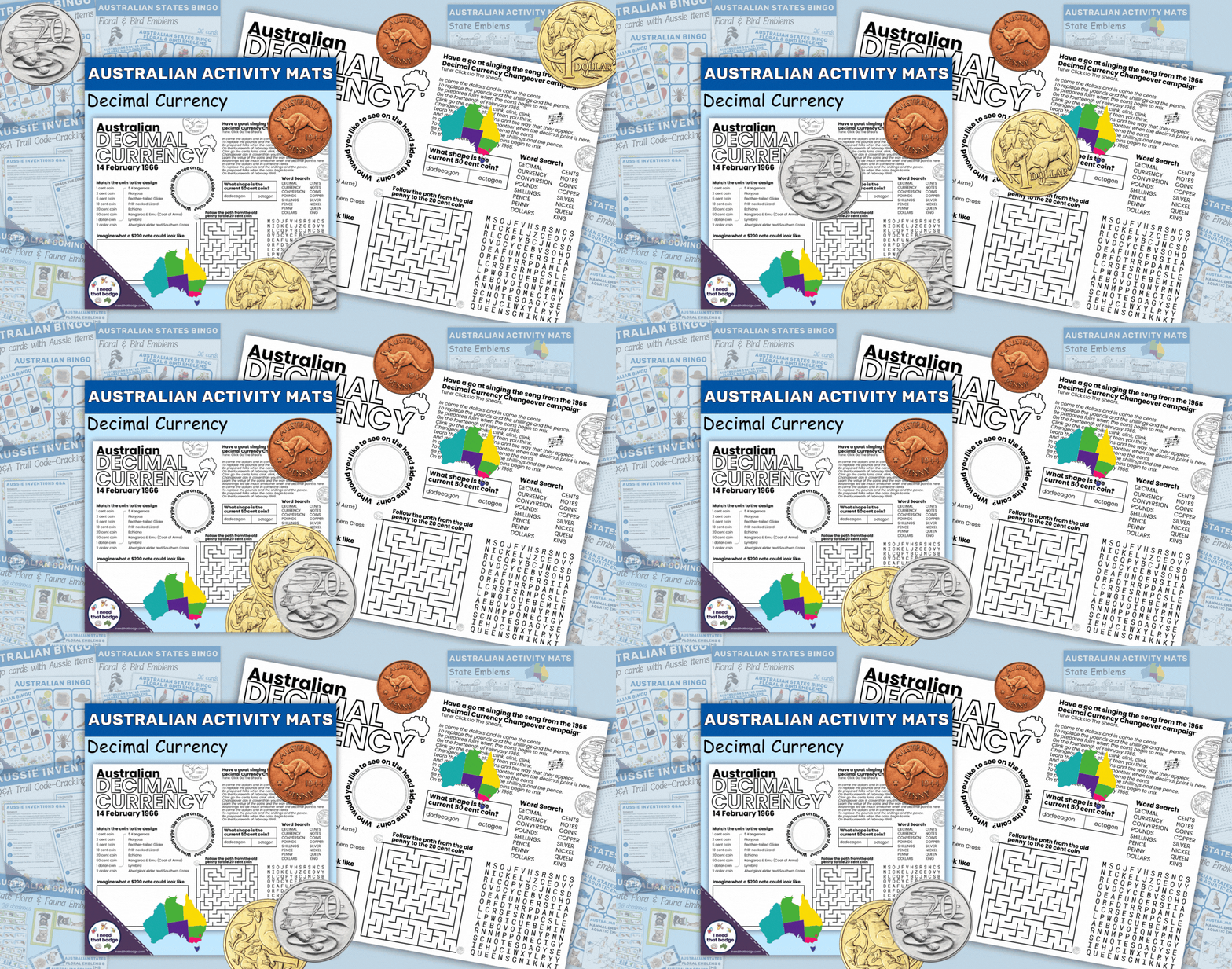
On 14 February 1966, Australia made one of the most significant economic changes in its history. Known as Decimal Day, the nation moved from the long-standing imperial system of pounds, shillings and pence to a modern decimal system of dollars and cents.
For generations, Australians had used a complicated currency structure:
- 12 pence = 1 shilling
- 20 shillings = 1 pound
- 240 pence = 1 pound
As international trade expanded and more countries adopted decimal systems, Australia recognised the need to modernise.
Why Change to Decimal Currency?
Before Federation in 1901, the six Australian colonies each issued their own currencies. These were closely modelled on the British system and generally exchangeable at equal value, so Federation didn’t create any pressure for a single national currency. Discussions began in 1902 about decimalisation, although Australia instead introduced the Australian pound in 1910, retaining the traditional pounds–shillings–pence system.
The push for decimalisation gained momentum in the 1950s and early 1960s. A Decimal Currency Committee was appointed in 1959 to investigate the benefits and practicalities of change. After careful planning, the government announced that Australia would adopt a decimal system based on dollars and cents.
The new structure was simple:
100 cents = 1 dollar
This made calculations far easier and aligned Australia more closely with trading partners such as the United States and Canada.
The Royal Controversy
The currency was almost not called the dollar at all.
A public consultation process was held and after receiving more than 1,000 suggestions, the shortlist included: austral, crown, dollar, pound, regal, tasman and royal. In 1963, Prime Minister Sir Robert Menzies announced that the new currency would be called the “royal”. The name was widely unpopular. Media commentary, public opinion, and even members of Parliament criticised the choice.
The government reversed the decision and instead adopted the name “dollar” — a more practical and internationally recognisable term. It was a rare example of swift policy change in response to public sentiment.
Preparing the Nation
The transition required enormous national preparation. Banks, businesses, schools and households all needed to learn new values, pricing and conversions.
A nationwide public education campaign was launched to ensure Australians were ready. This included:
- Conversion charts in newspapers and shop windows
- School lessons teaching decimal calculations
- Posters explaining coin values
- Television and radio advertisements
- The catchy promotional jingle: “In come the dollars and in come the cents…”
By Decimal Day itself, Australians were remarkably well prepared.
The Decimal Changeover Song
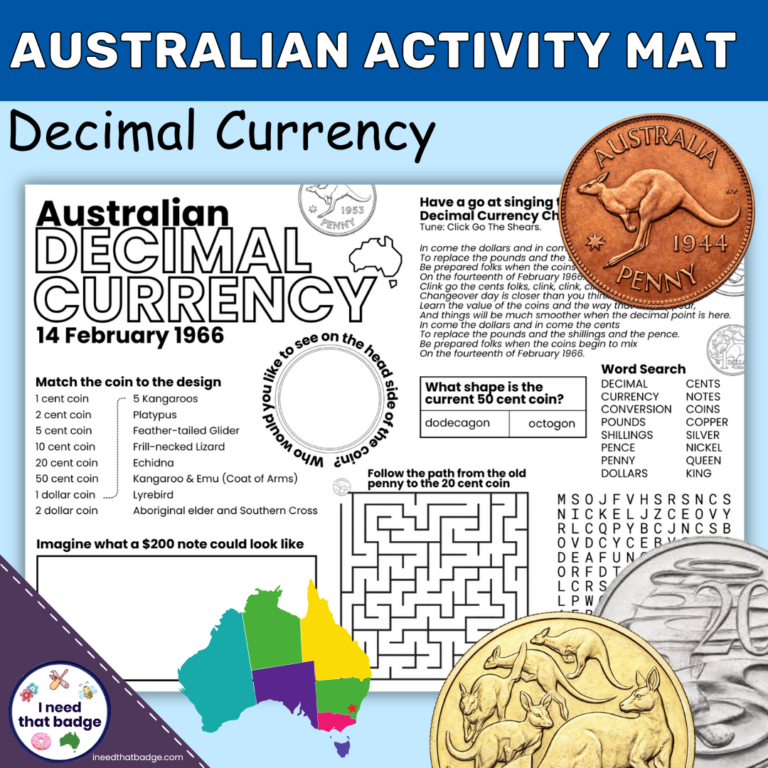
One of the most memorable features of the 1966 changeover was the catchy promotional song written for the Decimal Currency Board. Sung to the tune of the well-known Australian folk song Click Go the Shears, it featured the famous line:
“In come the dollars and in come the cents
To replace the pounds and the shillings and the pence…”
The jingle was broadcast widely on radio and television in the months leading up to 14 February 1966. Its simple, repetitive lyrics helped Australians remember the key message: that a new system of dollars and cents was coming, and that they needed to learn the new coin values.
By using a familiar tune and clear language, the campaign made what could have been a confusing economic shift feel approachable and even fun. The song is still remembered today and is often cited as one of the most successful public education campaigns in Australian history — a clever example of how music and media were used to prepare an entire nation for change.
In Come the Dollars and In Come the Cents – Full Lyrics
In come the dollars and in come the cents
To replace the pounds and the shillings and the pence.
Be prepared folks when the coins begin to mix
On the fourteenth of February 1966.Clink go the cents folks, clink, clink, clink,
Changeover day is closer than you think.
Learn the value of the coins and the way that they appear,
And things will be much smoother when the decimal point is here.In come the dollars and in come the cents
To replace the pounds and the shillings and the pence.
Be prepared folks when the coins begin to mix
On the fourteenth of February 1966.
The New Coins and Notes
On 14 February 1966, the following coins were introduced:
- 1 cent (bronze)
- 2 cents (bronze)
- 5 cents (cupronickel)
- 10 cents (cupronickel)
- 20 cents (cupronickel)
- 50 cents
Originally 80% silver and circular; changed in 1969 to the distinctive dodecagon shape and manufactured in cupro-nickel because the global price of silver skyrocketed and the silver in the coin became worth more than 50 cents. People were hoarding them to melt down for profit.
Each coin featured Australian fauna, reinforcing national identity while introducing the new system.
- 1 cent – Feather-tailed Glider
- 2 cent – Frill-necked Lizard
- 5 cent – Echidna
- 10 cent – Lyrebird
- 20 cent – Platypus
- 50 cent – Australian Coat of Arms (with kangaroo and emu)
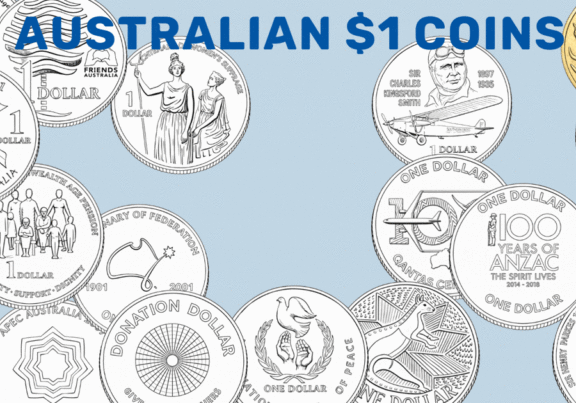
The one and two dollar denominations were originally issued as banknotes. The one dollar coin replaced the note in 1984, and the two dollar coin followed in 1988.
The designs on the paper banknotes featured prominent Australians rather than animals.
- $1 Note
Front: Queen Elizabeth II
Back: Aboriginal bark painting artwork (Arnhem Land design) - $2 Note
Front: Queen Elizabeth II
Back: John Macarthur (early wool industry pioneer) and a merino ram - $5 Note
The $5 note was introduced one year after Decimal Day in 1967.
Front: Queen Elizabeth II
Back: Sir Joseph Banks (naturalist on Captain Cook’s voyage) - $10 Note
Front: Francis Greenway (colonial architect)
Back: Henry Lawson (poet) - $20 Note
Front: Sir Charles Kingsford Smith (aviation pioneer)
Back: Reverend John Flynn (founder of Royal Flying Doctor service) - $50 Note
The $50 note was introduced later in 1973
Front: Howard Florey (penicillin)
Back: Ian Clunies Ross (scientist) - $100 Note
The $100 note was introduced in 1984
Front: Sir Douglas Mawson (explorer)
Back: John Tebbutt (astronomer)
Australia later became a world leader in currency innovation by introducing polymer banknotes in 1988.
One of Australia’s Largest Transitions
The decimal changeover was one of the largest peacetime administrative transitions Australia had ever undertaken. Prices had to be recalculated, accounting systems rewritten, vending machines updated, and millions of coins distributed nationwide.
Despite the scale of the task, the transition was widely regarded as a success. The careful planning and public education campaign meant there was minimal confusion or disruption.
Operation Fast Bucks
The physical move of the new money was a massive security operation. Dubbed “Operation Fast Bucks,” the government used a fleet of semi-trailers guarded by hand-picked, heavily armed police to distribute 600 million coins and 150 million banknotes across the country in the three months leading up to C-Day. It was one of the largest armored transport operations in Australian history. The bank closed for four days in the lead up so they could convert their machinery and processes to begin issue the new currency on the morning of Monday, 14th February.
The Dollar Jills
To help a confused public, the Decimal Currency Board hired a group of women known as the “Dollar Jills.” They were highly trained experts who toured the country, giving demonstrations at town halls, appearing on TV, and even answering a dedicated telephone hotline to explain how to convert pence to cents
A Lasting Legacy
Decimal Day marked more than a change in money. It symbolised Australia’s confidence as a modern, independent nation.
In later decades, Australia would again lead currency innovation by developing polymer banknotes, first issued in 1988 for the bicentenary. These notes are now used around the world.
From the debate over “royals” to the enduring familiarity of dollars and cents, the introduction of decimal currency remains a fascinating milestone in Australian history.
Reference and Further Reading
- Coinworks. Radio personality, Ed Phillips, talks to MD of Coinworks, Belinda Downie, and explores the notion that decimalisation in 1966 gave Australia the opportunity to “go its own way”. Accessed 13/2/2026.
- NSW Treasury. Australia’s determined transition to decimal currency – 1966. New South Wales Government. Accessed 13/2/26.
- Wikipedia. Australian dollar. Accessed 13/2/26.